What Agentic AI Actually Is
Agentic AI refers to AI systems that can plan a sequence of actions, execute those actions using tools and data sources, evaluate the results, and adjust course without a human directing every step. Unlike a chatbot that answers one question at a time, an agentic AI system pursues a goal across multiple steps, making decisions along the way to reach a defined outcome.
Think of the difference this way: a standard AI assistant tells you how to process a vendor invoice. An agentic AI system receives the invoice, extracts the data, checks it against your purchase order records, flags any discrepancies, routes the document to the right approver, and logs the result in your accounting system. No human intervention required between start and finish.
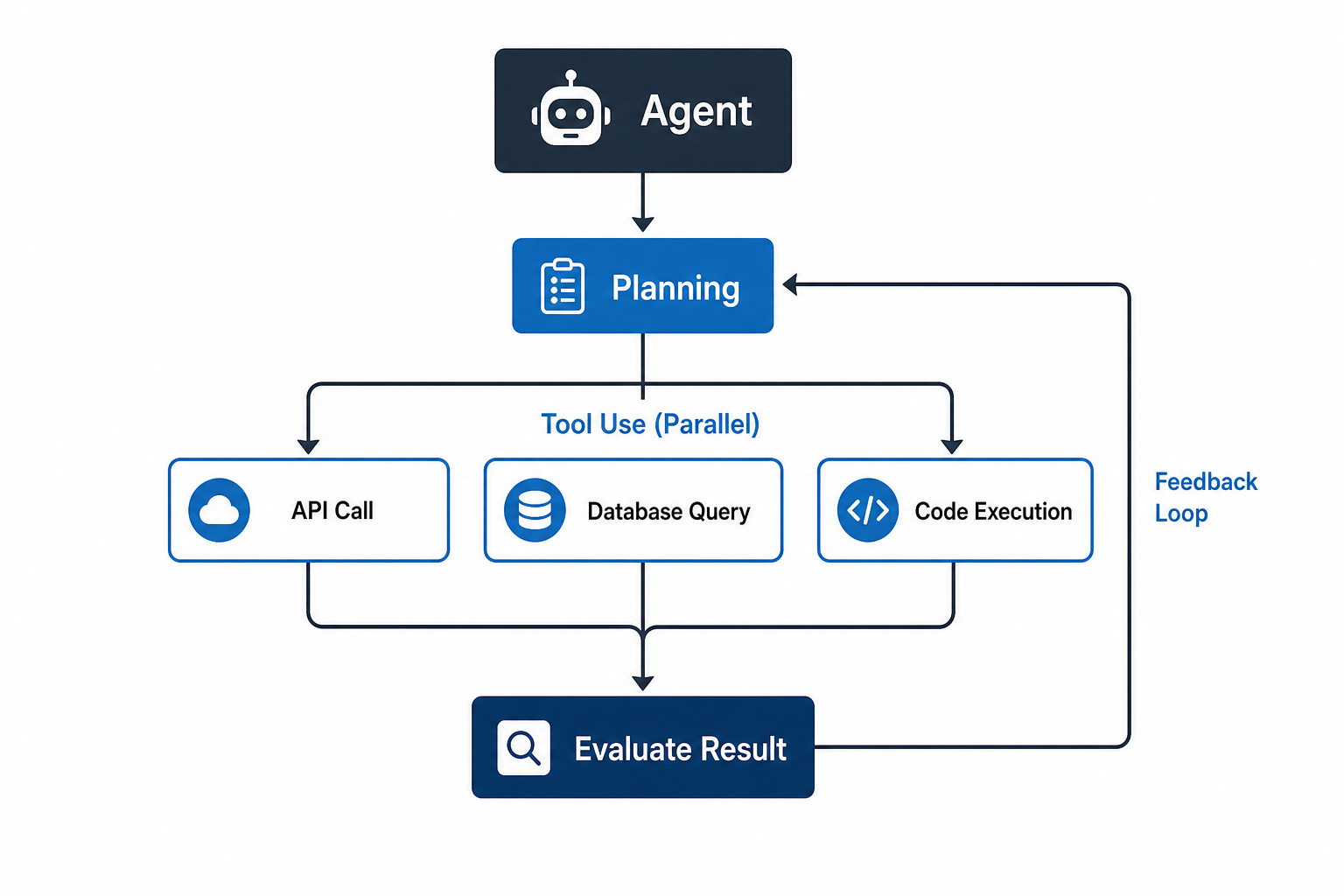
The underlying architecture typically combines a large language model with a planning layer, a set of tools the agent can call (APIs, databases, code interpreters), and a feedback loop that lets the agent check whether each action succeeded before moving to the next. This combination is what separates agentic systems from simpler AI tools.
Agentic AI vs. Chatbots: A Practical Comparison
Most businesses first encountered AI through chatbots. A chatbot receives a message, generates a response, and waits for the next message. The interaction is linear and reactive. Each exchange is essentially independent.
Agentic AI works on a fundamentally different model. When you assign a task to an agentic system, it breaks that task into sub-tasks, determines what information or tools it needs, executes each sub-task in order (or in parallel where possible), and checks its own output before proceeding. The key distinctions are:
- Planning: Chatbots respond. Agents plan. An agent creates a roadmap before it acts.
- Tool use: Agents can call external systems, read files, write code, query databases, and send API requests. A chatbot only generates text.
- Iteration: If an agent's action fails or returns unexpected results, it can retry, choose an alternative approach, or escalate. A chatbot has no mechanism to recover from a bad answer.
- Memory: Agents maintain context across an entire task, sometimes across multiple sessions. Chatbots typically lose context at the end of a conversation window.
This is not a criticism of chatbots. They serve a clear purpose for quick Q&A, customer support deflection, and information lookup. But when your business process requires multiple steps, multiple systems, and conditional logic, a chatbot cannot complete the job. An agentic AI system can.
Real Business Use Cases for Agentic AI
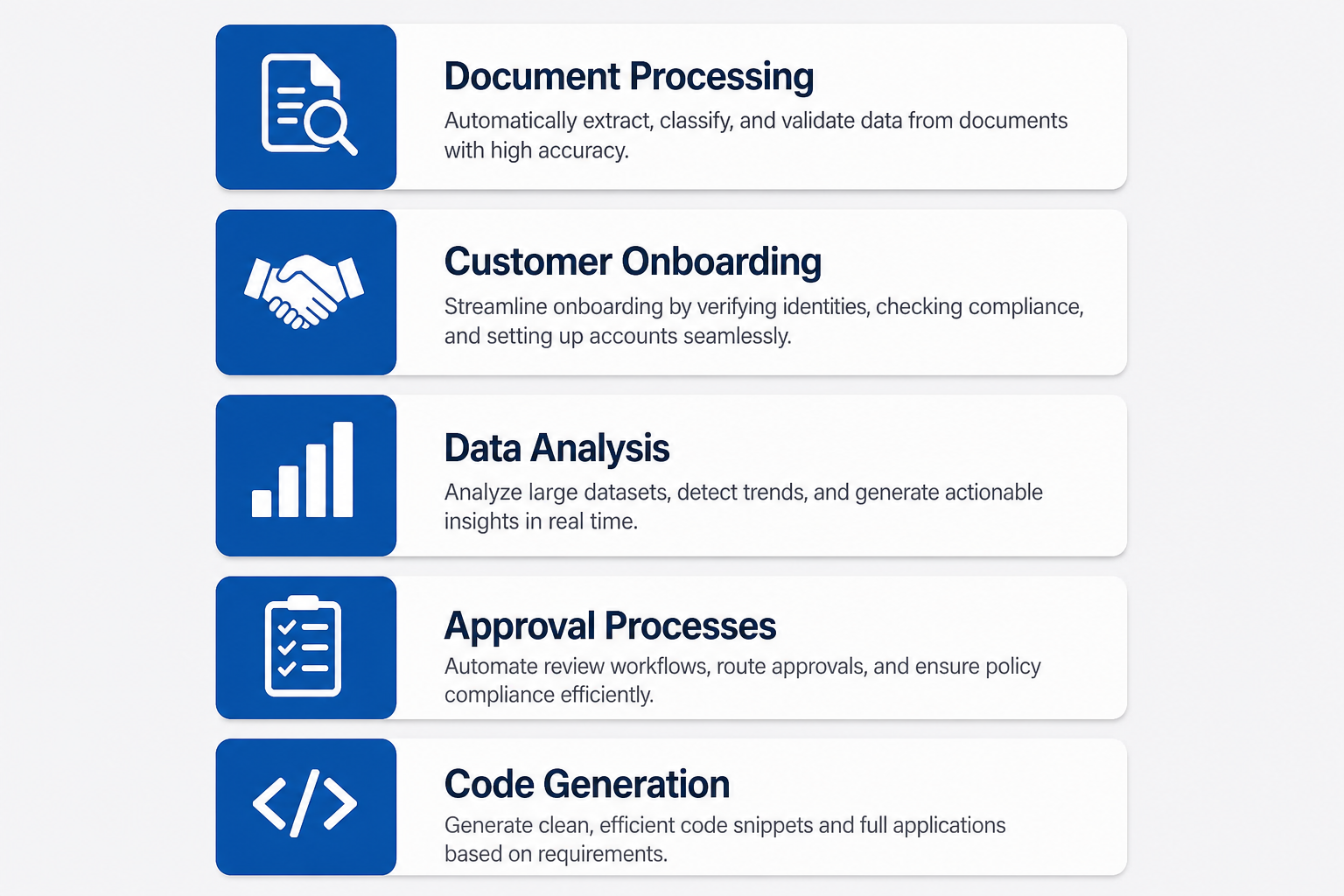
The clearest way to understand what agentic AI delivers in practice is to look at the specific workflows businesses are automating today.
Automated Document Processing Pipelines
Contracts, invoices, compliance documents, and medical records all require extraction, validation, and routing. An agentic system can ingest a document, extract structured data, cross-reference that data against internal records, apply business rules, and either complete the process or flag exceptions for human review. A financial services firm processing 500 contracts a month can reduce review time from hours to minutes per document.
Customer Onboarding Workflows
Onboarding a new B2B customer often involves identity verification, credit checks, account setup across multiple platforms, welcome communications, and initial configuration. Agents can coordinate each step across systems, confirm completion of each stage, and only surface issues that genuinely need a human decision. This cuts onboarding time from days to hours while reducing errors caused by manual data re-entry.
Data Analysis Chains
Rather than asking an analyst to pull data, clean it, run calculations, and produce a report, an agentic AI system can handle the full chain. Given a goal such as "produce a weekly sales variance report by region," the agent queries the data warehouse, performs the required calculations, identifies statistically significant changes, and writes a structured summary with supporting figures.
Multi-Step Approval Processes
Procurement, HR requests, and budget approvals all follow conditional logic. An agent can route requests based on value thresholds, collect digital approvals from the right stakeholders in sequence, send reminders when approvals stall, and update the relevant system of record when the process completes.
Code Generation and Review
Development teams use agentic systems to generate boilerplate code, write unit tests, scan for security vulnerabilities, and open pull requests. The agent runs the test suite, reads the output, fixes failures, and only requests a human review when the code passes automated checks. Teams report meaningful reductions in time spent on routine coding tasks without sacrificing code quality.
Implementation Considerations: What to Plan For
Building an agentic AI system requires more planning than deploying a chatbot. The following factors determine both cost and outcome.
Budget and Cost Range
A production-grade agentic AI implementation for a business process typically costs between $10,000 and $50,000 to build, depending on complexity. Simple single-agent pipelines sit at the lower end. Multi-agent systems with custom tool integrations, security controls, and enterprise data connections sit at the higher end. Ongoing costs include API usage fees and maintenance, which typically run 15 to 20 percent of the build cost annually.
Data Requirements
Agents are only as useful as the data they can access. Before building, audit what data your target process requires, where it lives, whether it is structured or unstructured, and how clean it is. Poor data quality is the most common reason agentic implementations underperform. The agent will surface problems in your data that humans previously worked around manually.
Security and Access Controls
Because agentic systems act on your behalf across real systems, the security model matters enormously. Every tool the agent can call is a potential attack surface. Implement the principle of least privilege: the agent should only have access to the systems and data it needs for its specific task. Log every action the agent takes. Build human-in-the-loop checkpoints for high-stakes decisions, particularly anything involving financial transactions or customer data changes.
Choosing the Right Model
The planning quality of an agentic system depends heavily on the underlying language model. GPT-4o, Claude 3.5, and Gemini 1.5 Pro all perform well for complex reasoning tasks. Smaller, faster models work for well-defined sub-tasks where cost efficiency matters more than reasoning depth. Many production systems use a combination: a powerful model for planning and a faster model for execution of routine steps.
Is Your Business Ready for Agentic AI?
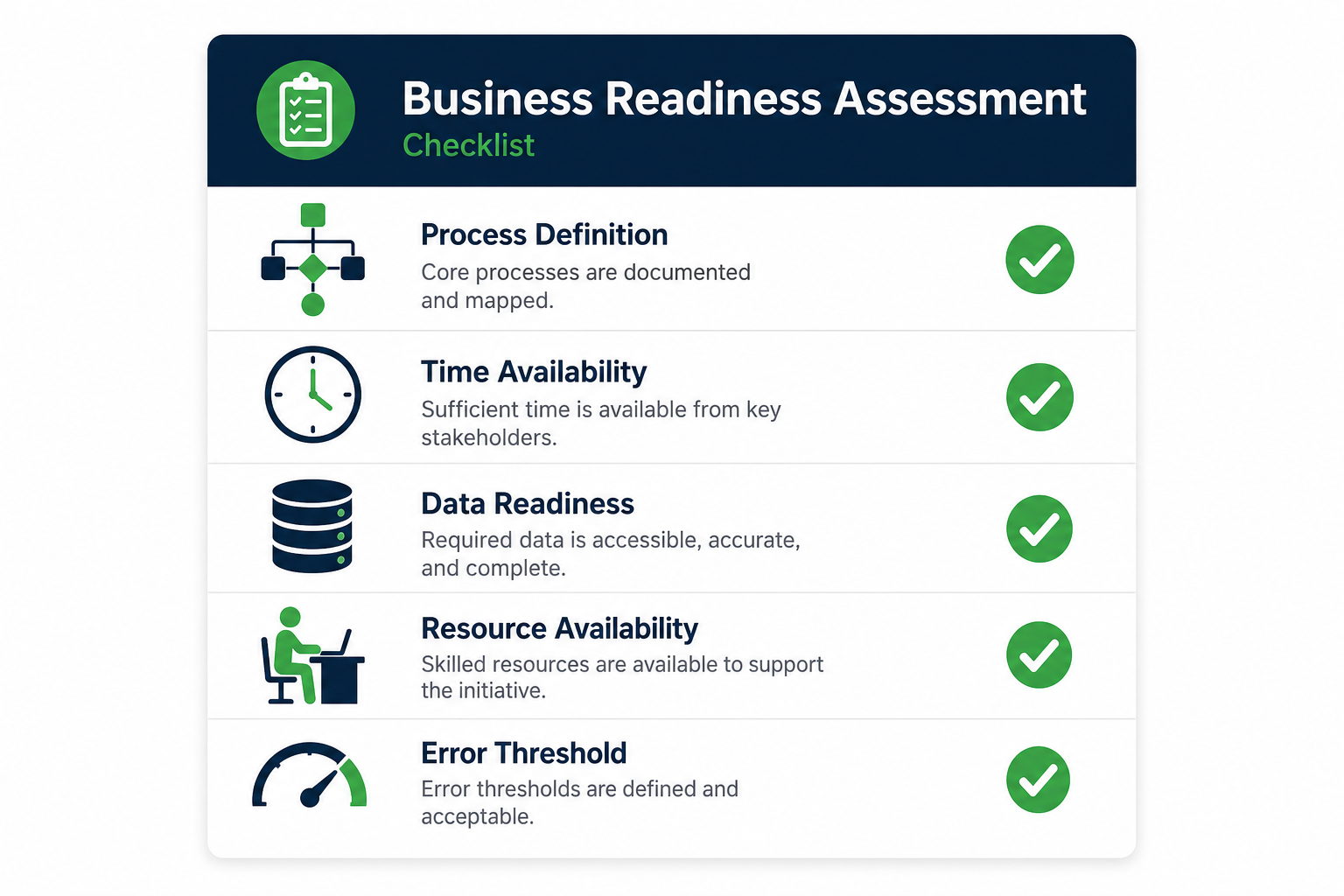
Not every business is at the right stage to benefit from agentic AI. Readiness depends on specific conditions being in place before you invest.
Your business is a strong candidate if:
- You have at least one clearly defined, repetitive process that involves five or more manual steps across two or more systems.
- That process runs frequently enough that automation creates measurable time or cost savings. A good baseline is 20 or more runs per week.
- Your data for that process is reasonably structured and accessible via API or direct database connection.
- You have someone internally who can own the AI system after it is built, monitor its outputs, and escalate edge cases.
- Your organization is willing to accept a defined error rate and has a plan to handle cases the agent cannot resolve.
Your business is not yet ready if your processes are poorly documented, your data lives in disconnected spreadsheets with no API access, or your team has no capacity to monitor and maintain a new system. In those cases, the right first step is process documentation and data infrastructure, not AI.
How DevIT Group Builds Agentic AI Systems
DevIT Group designs and builds agentic AI systems for businesses that have a specific process problem and want a production-grade solution, not a proof of concept that never leaves a sandbox.
The engagement starts with a process audit. We map the target workflow in detail, identify every data source and system the agent needs to touch, and define clear success criteria before writing a single line of code. This stage typically takes one to two weeks and surfaces the data or access issues that would otherwise appear mid-build.
We then select the model stack and toolset suited to the task. We work with OpenAI, Anthropic, and Google models depending on the reasoning requirements and cost profile. We build custom tool integrations for your specific systems rather than forcing your process into a generic template.
After the initial build, we run structured testing across real process data, measure accuracy against the success criteria defined in the audit, and tune the agent's planning prompts and error handling before handover. We also provide monitoring dashboards so your team can see what the agent is doing and where it needs human assistance.
If you have a process that qualifies and want to understand what a build would cost and how long it would take, visit our AI integration services page or book a 30-minute call with our team.
Frequently Asked Questions About Agentic AI
How is agentic AI different from robotic process automation (RPA)?
RPA follows rigid, pre-programmed rules. It breaks when the interface or process changes. Agentic AI reasons about what it needs to do and can adapt when inputs vary. It handles unstructured data like documents and emails that RPA cannot parse reliably. The two approaches complement each other: agentic AI handles the reasoning and decision-making, while RPA can handle deterministic click-and-fill tasks within the same pipeline.
What happens when an agentic AI system makes a mistake?
Well-built agentic systems include error detection, retry logic, and human escalation paths. The agent checks its own output at each step and flags tasks it cannot complete with confidence. You define the threshold: high-stakes steps like financial transactions or contract approvals should always include a human checkpoint. Logging every action means you can audit what happened and correct the system's behavior for future runs.
Do we need to build our own AI model to use agentic AI?
No. Most businesses use existing foundation models from OpenAI, Anthropic, or Google and build the planning, tool-use, and integration layer on top. Training a custom model from scratch costs millions of dollars and makes sense only for very specific, high-volume applications. The value in an agentic system comes from the architecture around the model, not the model itself.
How long does it take to build and deploy an agentic AI system?
A focused single-process implementation takes six to twelve weeks from initial audit to production deployment. More complex multi-agent systems with extensive integrations take three to six months. The timeline depends more on data readiness and stakeholder access to the systems being integrated than on the AI development itself.